
“NO & NC Contacts- the Building Blocks in Electrical system!“
One of my college professor had spoken the above statement. He also said Electrical system is standing on these two blocks.
At that time, I didn’t take it seriously. But now, I know the importance of these very well. I myself using these building blocks to create a logic in Electrical system.
‘NO & NC Contacts‘ What are they? Where & How, These are useful in Electrical system. All of these, are going to be discussed in this post.
|
|
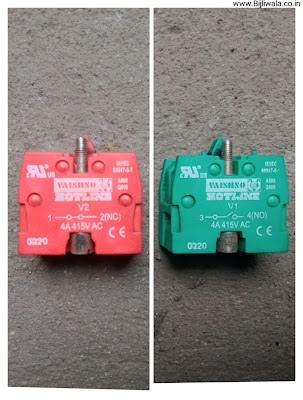
What are NO & NC Contacts ?
|
|
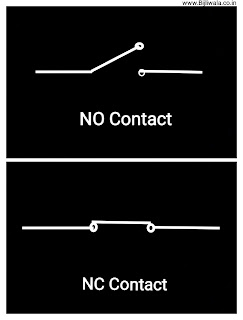
- NO Stands for ‘Normally Open‘
- NC Stands for ‘Normally Closed‘
|
|

|
|

How these duos are being used ?
- “NO –A simple BELL Switch is the Best example of NO contact in which contact closes only when it get pressed. After that switch again retain its initial NO state when switch get released.”
-
“NC -Refrigerator’s door light switch is type of NC Contact. When door of refrigerator get opened; the switch get unpressed & switch’s contact get closed, At this stage light get ON. On the other hand, when door get closed; switch get pressed. Switch get Opened which results light get OFF.“Next, some of the examples been explained which states Where & How these duos are being used !
IN MOTOR STARTERS
In Dol Starter
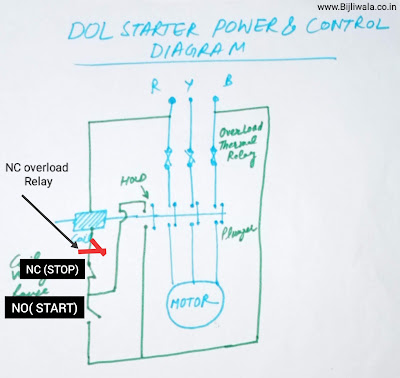
DOL stands for direct on Line. It is the most important starter for small rating Induction motors. It’s circuit is very simple & easy to understand.Wiring Diagram of DOL Starter In this circuit, - NC contact is used at two places. 1st NC used for stop button & 2nd NC for overload protection. Both the NC’s are connected in series connection.
- Whereas NO is used in start button & in hold circuit.
- Actually, Contactor’s 3 main power contacts are also type of NO contacts.
IN CREATING LOGIC
- At Input side 1 represents switch is Pressed & 0 represents unpressed.
- At Output side 1 represents output is ON & 0 represents output is OFF.
- Explaining AND Gate
- Explaining OR Gate
|
|

- Explaining NAND Gate
- Explaining NOR Gate
|
|

USE IN RELAYS
|
|
|
|

|
|
|
|
|
|
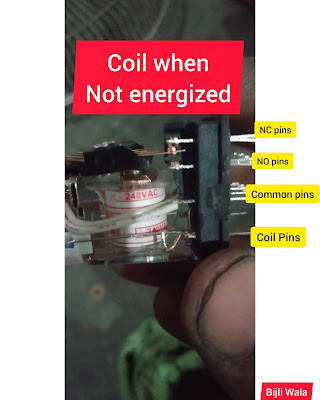
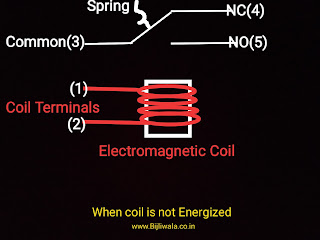
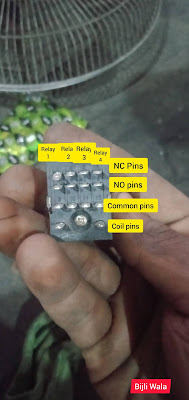
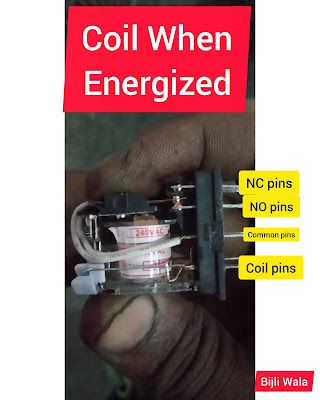
With the help of 14 pins relay, Multiple functions can be controlled with 1 signal input which makes easy to create logic !
USE IN DEVICES AS A RELAY
|
|
|
|
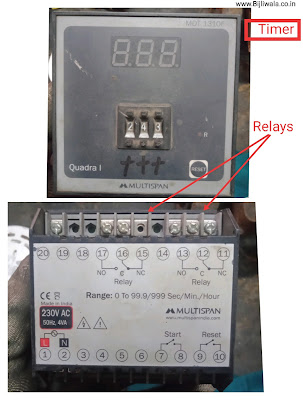
USE IN PROGRAMMABLE DEVICES
|
|

Tips for Learners
✔ Always think of default state when identifying NO/NC in diagrams.
✔ NC contacts are often used in safety circuits, so opening them can stop machinery.
✔ In schematics, NEVER assume: check the labeled symbol or datasheet.
Frequently Asked Questions (FAQs) — NO & NC Contacts
Q1. What does NO and NC mean in electrical contacts?
Answer:
NO stands for Normally Open, meaning the contact remains open (no current flow) in its default state.
NC stands for Normally Closed, meaning the contact remains closed (current flows) in its default state.
Q2. What does “normally” mean in NO and NC contacts?
Answer:
“Normally” refers to the rest condition of the device — when no force is applied, no button is pressed, and no coil is energized.
Q3. Which contact is safer — NO or NC?
Answer:
NC contacts are generally safer and commonly used in safety circuits.
If a wire breaks or power fails, the NC circuit opens and stops the system automatically.
Q4. Why are stop push buttons always NC?
Answer:
Stop push buttons use NC contacts so that any wire break, loose terminal, or power failure will immediately stop the machine.
Q5. Why are start push buttons normally NO?
Answer:
Start buttons are NO because the circuit should energize only when the button is intentionally pressed.
Q6. How can I identify NO and NC contacts physically?
Answer:
Most devices mark terminals as NO, NC, and COM.
Always verify using the device datasheet or by continuity testing with a multimeter.
Q7. How do NO and NC contacts work in a relay?
Answer:
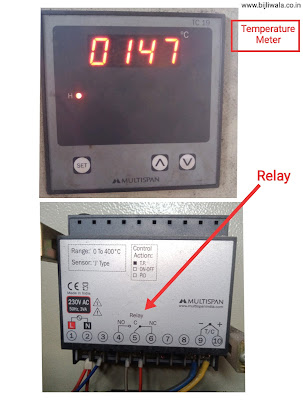
When the relay coil is not energized, COM is connected to NC.
When the coil is energized, COM switches to NO.
Q8. Can NO and NC contacts be used to create logic circuits?
Answer:
Yes.
NO contacts in series create AND logic.
NO contacts in parallel create OR logic.
NC contacts are used for NAND and NOR logic.
Q9. Are NO and NC contacts used in PLC systems?
Answer:
Yes. PLC ladder logic symbols are directly based on NO and NC contacts.
Q10. Can one device have both NO and NC contacts?
Answer:
Yes. Many relays, contactors, and push buttons provide both NO and NC auxiliary contacts.
Q11. What happens if I use the wrong contact type?
Answer:
Using the wrong contact can cause machine malfunction, safety failure, or unexpected operation.
Q12. Where are NO and NC contacts commonly used?
Answer:
They are used in motor starters, control panels, automation systems, alarms, and safety interlocks.
Conclusion
- NO & NC contacts are real building blocks in electrical system.
- NO stands for normally opened While NC stands for normally closed.
- Bell switch is the simplest example of NO contact which get connects when switch get pressed.
- Refrigerator door’s light switch is the simplest example of NC contact which connects when switch remains unpressed.
- From simplest logic to complex programming in programmable devices, NO-NC contacts play very crucial role.
2 Responses